 by Admin
 In a modern factory, the greatest value does not lie in the concrete, steel structure, or roofing system. It lies in the production line.
An automated production line can be worth tens or even hundreds of millions of dollars. Yet a disruption lasting only a few hours can result in losses far exceeding the construction cost of an entire facility component.
According to Siemens' The True Cost of Downtime 2024 survey, conducted among more than 500 global manufacturing corporations, the cost of one hour of downtime in highly automated factories can range from USD 36,000 to more than USD 2.3 million, depending on the industry. In the automotive sector, losses can reach approximately USD 2.3 million per hour.
See the complete report here.
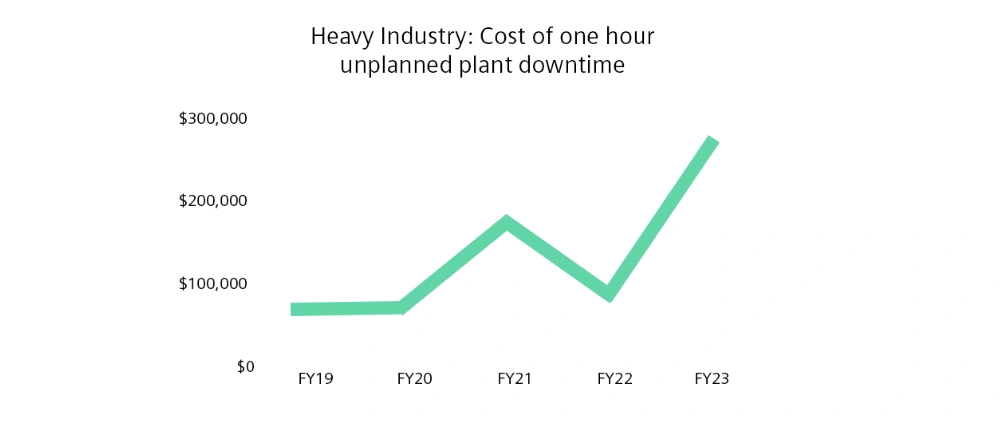
The Cost of One Hour of Unplanned Production Downtime in Heavy Industry
What is particularly noteworthy is that not every operational disruption originates from equipment or technology failures.
In reality, many operational issues stem from seemingly minor construction details: a joint that is not properly treated according to standards; a poorly designed drainage point; a waterproofing system with insufficient durability; or simply a roof leak that develops after several rainy seasons.
Viewed purely from a construction perspective, these may appear to be minor technical deficiencies. However, from the perspective of an FDI investor, especially companies operating in high-tech manufacturing, electronics, semiconductors, aerospace, pharmaceuticals, food processing, or automated logistics, they can become the starting point of a far greater chain of risks.
Water intrusion can affect raw materials, electrical systems, automated robots, precision measurement equipment, clean production environments, and product quality. In such situations, a company is not merely repairing a leak. It may need to halt production lines, inspect equipment, reassess product quality, sanitize production areas, repeat validation procedures, and face the risk of delayed deliveries to customers worldwide.
At that point, the largest cost is no longer the repair itself. It is the cost of disruption.
This is why, in recent years, the contractor selection criteria of many FDI enterprises have changed significantly. In the past, investors primarily focused on whether a project could be completed on schedule and within budget. Today, they ask a far more important question:
Can this facility reliably protect production operations for 10, 20, or even 30 years of operation?
This is also when the concept of a "warranty" evolves beyond a post-handover service. It becomes a reflection of design capability, construction quality, and the contractor's confidence in the facility it has built.
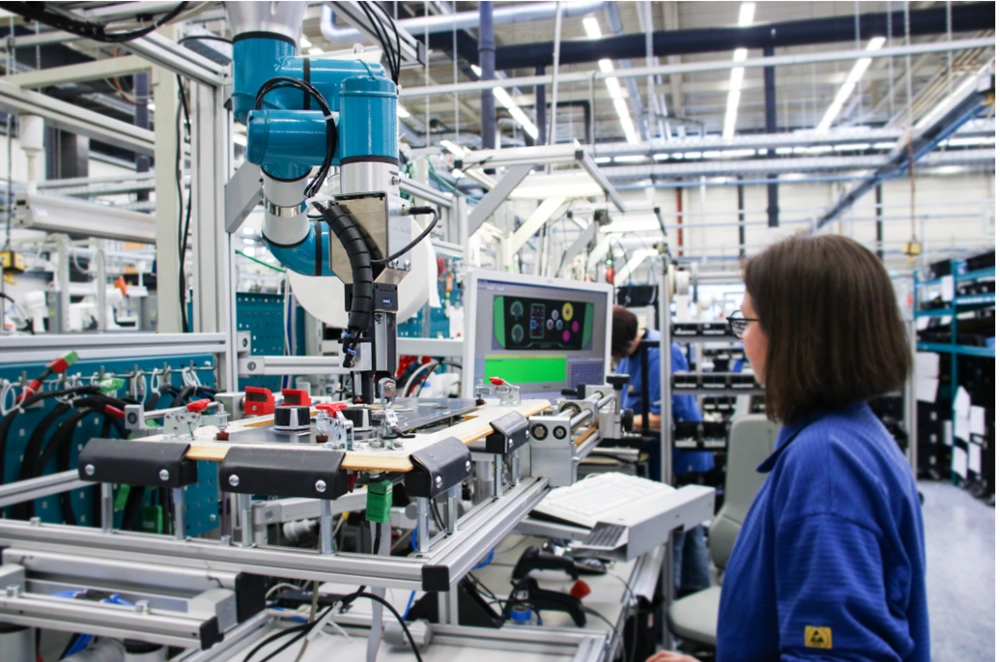
On-Time Completion Is Only the Minimum Requirement. Stable Operation Is the Real Value
For any general contractor, completing a project on schedule is always considered a success. However, for investors, particularly FDI enterprises, that is merely the beginning.
The day a factory is handed over is not the end of a project. It is the day production operations begin, and the moment when all risks start to be truly tested.
A factory may be built according to specifications, within budget, and delivered on time. Yet if operational issues emerge after only a few years and force production lines to stop for hours at a time, the value of on-time delivery quickly loses its significance.
As a result, more international investors are no longer evaluating contractors solely on their construction capabilities. They assess their ability to minimize risks throughout the facility's operational lifecycle.
.webp)
Interior view of Amazing Ecotech Textile Quang Ngai Factory, delivered by Dinco E&C as the Design & Build general contractor.
In the past, the common question was: "When will this project be completed?". Today, the question has become: "How long will this facility operate reliably?"
The difference between these two questions may seem subtle, but it fundamentally changes a contractor's approach.
When the objective extends beyond timely completion to protecting production operations for years after handover, every design and construction decision must meet a higher standard. Waterproofing solutions, for example, can no longer be selected simply based on cost. They must be chosen based on their ability to maintain long-term performance under the factory's actual environmental, climatic, and operational conditions.
This is why, for many multinational corporations, selecting a contractor is not simply choosing a construction partner. They are choosing a partner capable of protecting an investment worth tens or hundreds of millions of dollars.
Ultimately, investors are not merely buying a building. They are buying peace of mind. They are buying operational continuity. Above all, they are buying confidence that their factory will continue generating value long after handover.
Viewed from this perspective, a warranty takes on an entirely different meaning. It is no longer a promise to repair defects when they occur. It is a commitment that every possible measure has already been taken to prevent those defects from occurring in the first place.
A Commitment Is Valuable Only When Backed by Proven Capability
In industrial construction, reputation is not built through promises. It is built through completed projects, long-standing client relationships, and factories that continue operating reliably years after handover.
This is also how Dinco E&C views the value of commitment.
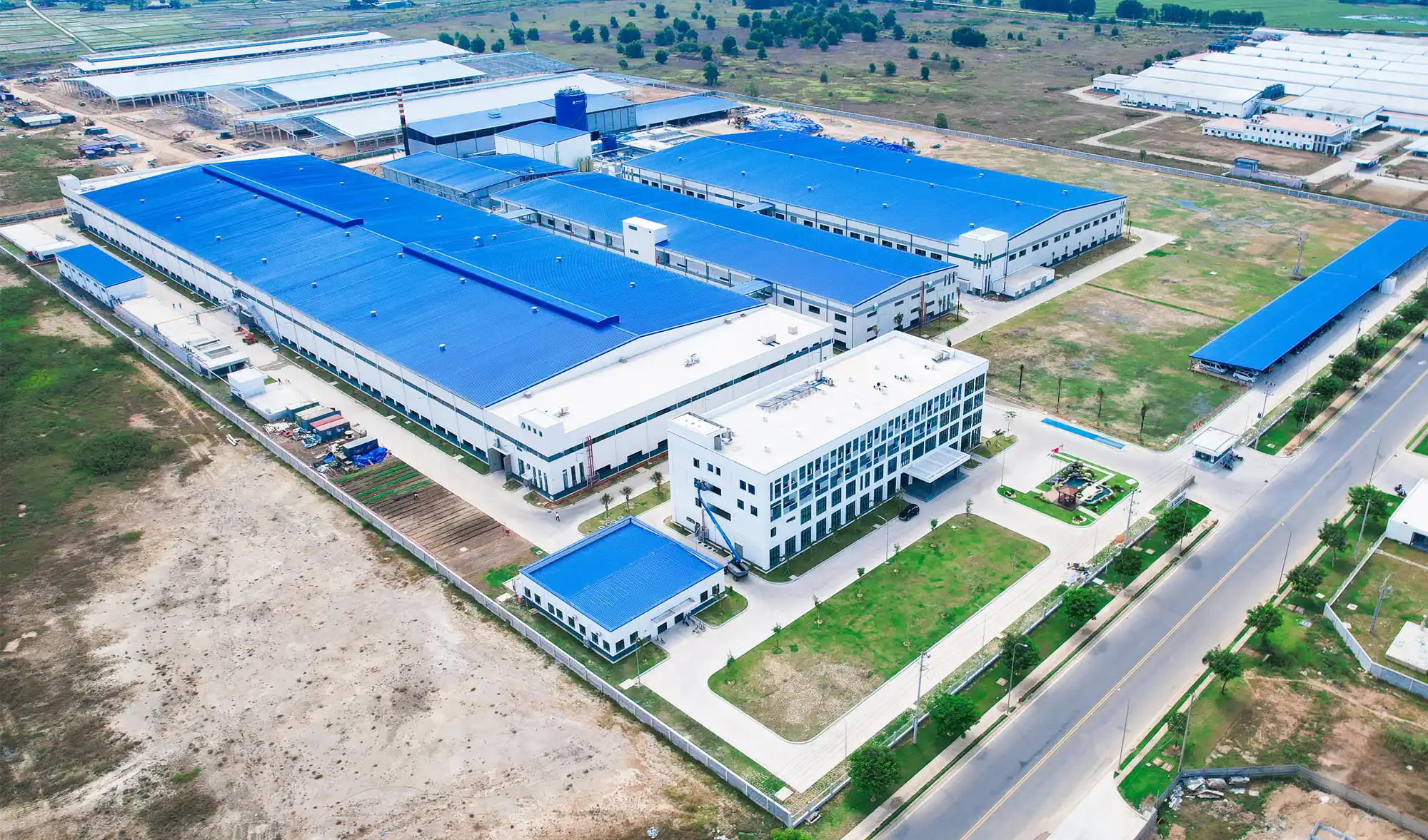
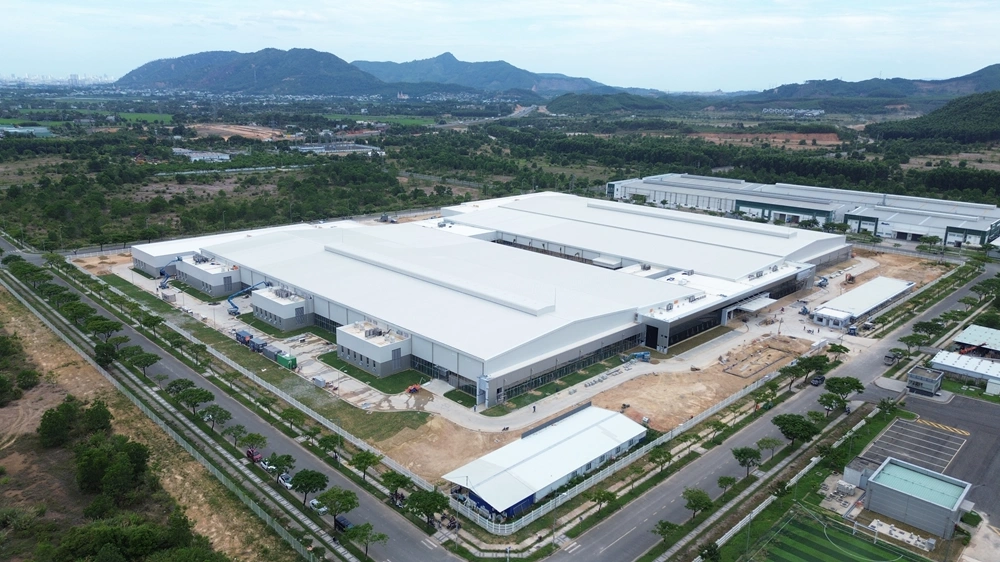
Dinco understands that a 10-year waterproofing warranty policy means little unless it is supported by proven capability. With more than two decades of experience in the Design & Build sector, Dinco has partnered with hundreds of FDI enterprises investing in manufacturing facilities throughout Vietnam. To date, Dinco has delivered more than one million square meters of industrial construction floor area nationwide, and every Design & Build project undertaken by Dinco includes a 10-year waterproofing warranty.
More meaningful than these figures is the trust Dinco has earned from investors representing advanced industrial economies, including the United States, Japan, Germany, South Korea, Belgium, the Netherlands, Singapore, and China.
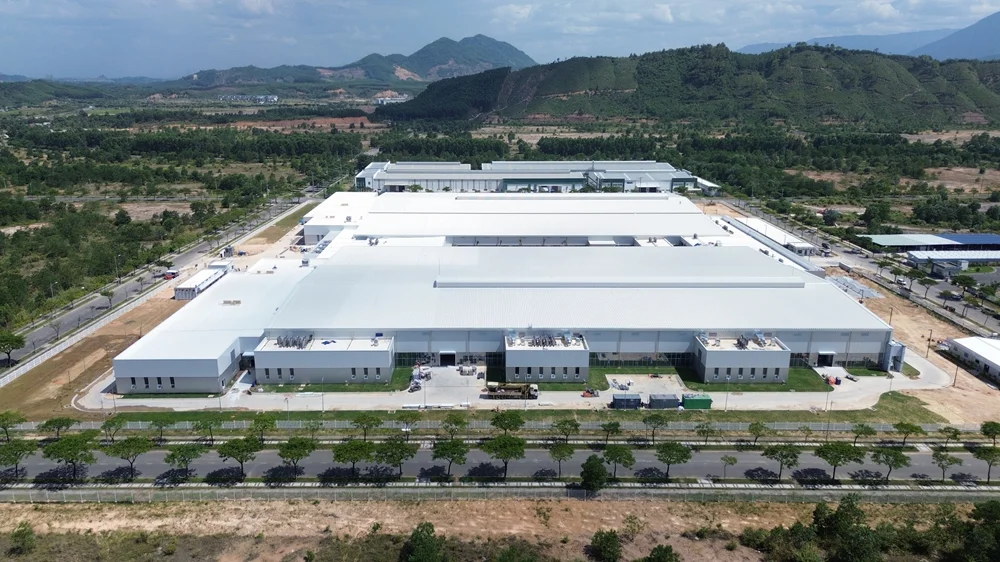
Dinco recognizes that every market has its own technical standards, and every industry has unique operational requirements. However, all investors share one common expectation:
A facility that can operate safely, reliably, and sustainably for years to come.
Working alongside FDI enterprises has enabled Dinco to gain not only construction expertise but also a deeper understanding of factory operations, production-line protection, and how even the smallest risks can impact a client's business performance.
For this reason, Dinco approaches every project from the investor's perspective. We do not simply ask, "How can we build this correctly?" We also ask ourselves, "How can this facility continue operating reliably 10, 20, or even 30 years from now?"
Many contractors can offer a warranty period. However, the question investors should ask is not: "How many years is the warranty?"
Instead, they should ask: "What gives the contractor the confidence to make that commitment?"
The longer the warranty period, the greater the risk assumed by the contractor.
In reality, most waterproofing problems do not appear immediately after project handover. They often emerge only after years of exposure to weather cycles, as materials, connections, and workmanship are subjected to environmental stresses.
This explains why a long-term warranty reflects far more than a commitment to address future issues. It reflects the contractor's ability to control quality from the very beginning.
A long-term commitment has value only when the likelihood of failure has already been minimized during the design stage through appropriate waterproofing solutions, material control, construction standards, and quality management systems.
In other words, the warranty period is merely the outcome. What truly matters is the capability that makes such an outcome possible. From this perspective, a warranty is no longer an after-sales service. It becomes an indicator of the contractor's confidence in the quality of the facility it delivers.
Watch the video testimonial below to learn how investors evaluate Dinco E&C's 10-Year Waterproofing Warranty Policy.
=> See more: https://dinco.com.vn/testimonials
A 10-Year Commitment Begins on Day One of the Project
In industrial construction, there is an interesting paradox:
The best projects are often the ones where, after handover, the investor rarely has reason to contact the contractor again.
This is not because the contractor lacks responsibility. Rather, it is because the facility has been designed, constructed, and quality-controlled well enough to operate reliably for years without disruptions that affect production.
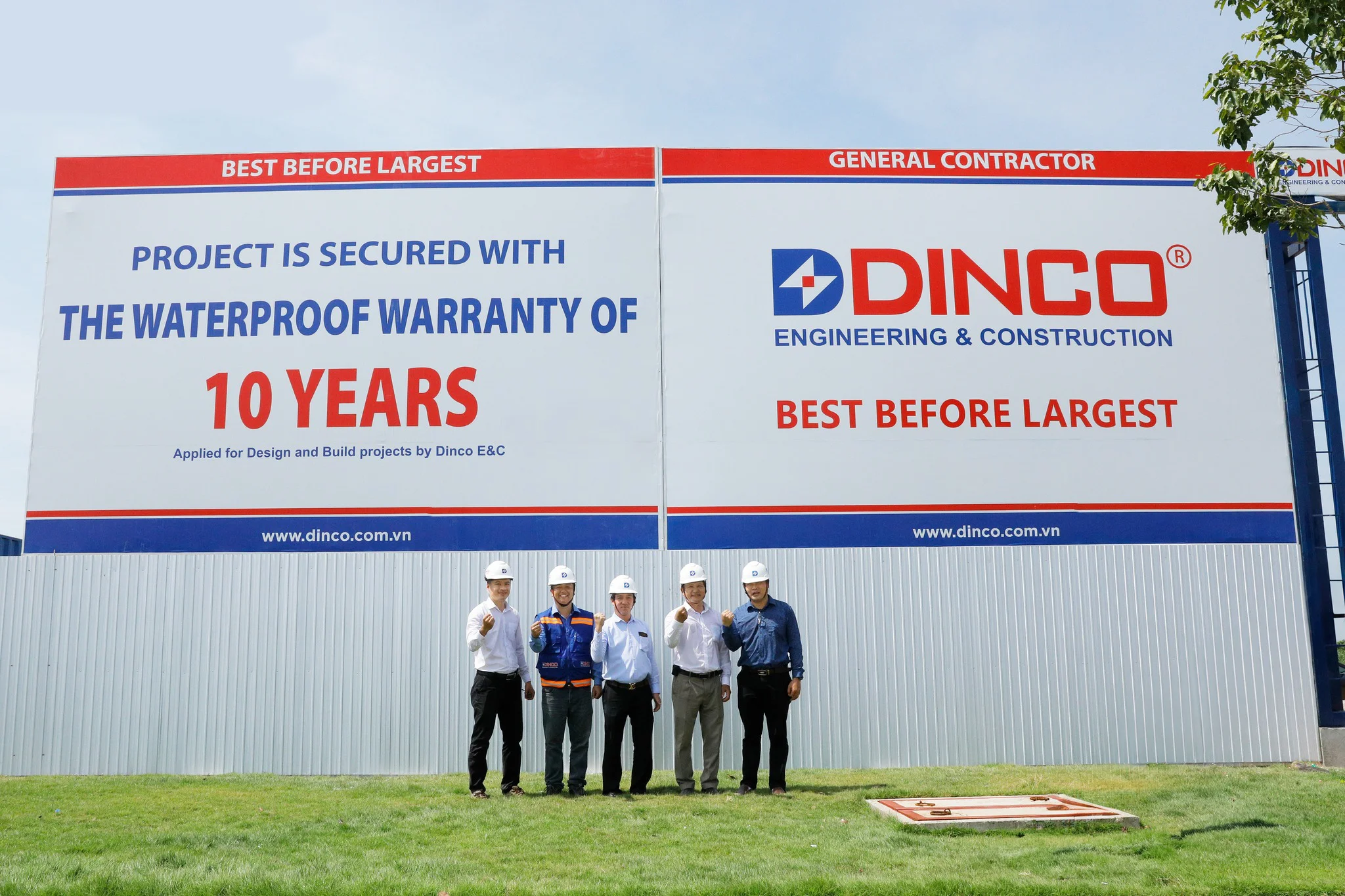
This philosophy has guided Dinco for more than two decades.
Dinco believes that a contractor's responsibility does not end at project acceptance. It begins with the very first design sketches, is reflected in every material selection, every construction detail, every quality-control procedure, and continues throughout the facility's operational life.
For this reason, a 10-year waterproofing warranty is not an after-sales program. It is the outcome of a comprehensive quality management system integrated across design, engineering, construction, commissioning, and warranty services. More importantly, it represents a commitment to accountability for every project Dinco undertakes.
Because, ultimately, what a contractor truly delivers is not just a building.
It delivers peace of mind, enabling factories to operate continuously, protecting investments worth hundreds of millions of dollars, and creating value for many years after handover.
.webp)
Leave a comment