 by Admin
 When Yadong Group (China) decided to expand its manufacturing capacity in Vietnam, its goal was not simply to build another factory. More importantly, the factory had to be operational at the right time to support a pre-planned production schedule and supply chain strategy.
In industrial manufacturing, especially in the textile sector, construction progress determines more than just the completion date of a facility. It also dictates when the factory can begin generating revenue. Every month of delay can postpone equipment installation, workforce recruitment, commissioning activities, and fulfillment of already committed orders. When one link in the chain is delayed, all subsequent activities are affected, leading to additional costs, missed business opportunities, and reputational risks with customers and partners.
This was the challenge Yadong had to deal with
when developing the Amazing Ecotech Textile project in Quang Ngai.
A Factory Needs More Than Just Completion
Amazing Ecotech Textile was developed on a site of more than 82,000 m², with a designed capacity of 48 million m² of products per year and a wastewater treatment system capable of processing 3,200 m³ per day, meeting the stringent requirements of advanced textile dyeing operations.
However, the project's challenge was not its scale.
What mattered most was ensuring that every component of the facility would be ready for production lines to be installed and operated according to the investment schedule.
In a textile dyeing plant, structural works, MEP systems, and manufacturing lines must function as an integrated system. Even a minor discrepancy can delay equipment installation, incur modification costs, and directly impact the planned start of operations.
This is why Yadong was not simply looking for a contractor.
They needed a construction partner capable of aligning with the investor's vision, where every design and construction decision was focused on one common objective: enabling the factory to operate safely, reliably, and efficiently from day one.
.webp)
Mr. Xue Liang, Chairman of the Members' Council of Amazing Ecotech Textile Co., Ltd., delivered a speech at the Groundbreaking Ceremony of the Project.
Starting with an Understanding of How the Factory Will Operate
Rather than beginning with the question, "How should we build it?", the Dinco project team started by asking, "How will the factory operate?"
Based on this approach, Dinco worked closely with the investor to review the entire production process, equipment locations, material flow routes, technical system requirements, and post-handover operational plans. Once the operating model was fully understood, every design and construction decision could be aligned with the ultimate goal of bringing the factory into production on schedule.
From the earliest meetings, all parties agreed on one guiding principle:
"Every decision made during construction must reduce risks during the operational phase."
This principle became the foundation for the entire project delivery process.
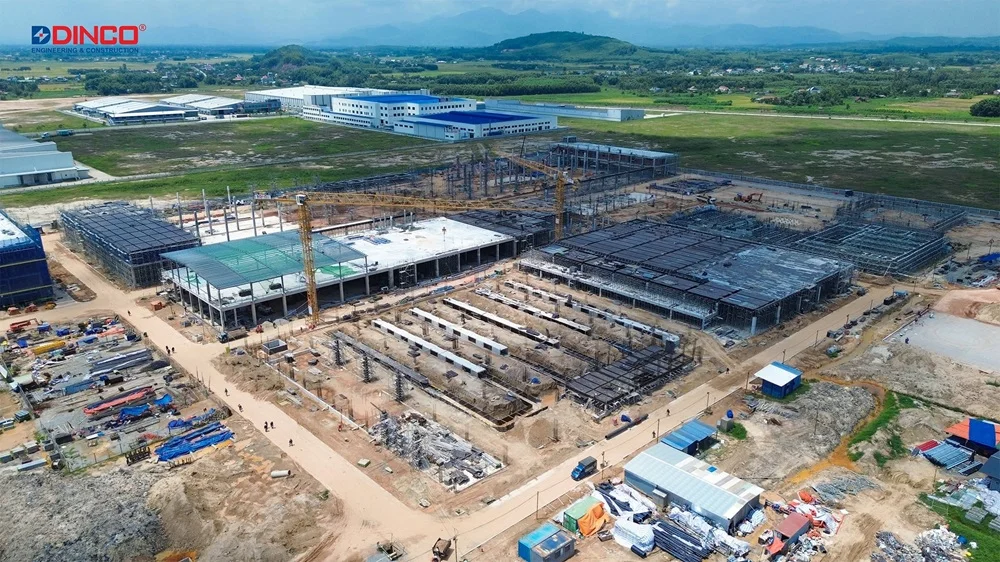
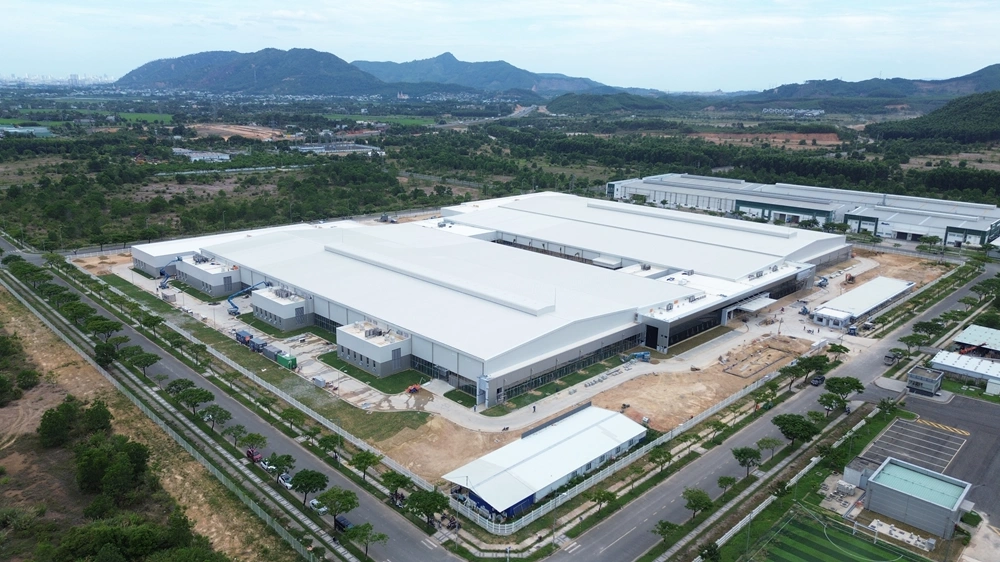
Photos of the Factory Construction
Throughout the 10-month construction period, one of the project's biggest challenges was the investor's highly intensive equipment installation plan, which was carried out almost simultaneously across multiple production areas. This required individual sections of the facility to be completed and handed over on time without affecting installation, commissioning, and operational schedules.
To meet these requirements, Dinco deployed multiple construction teams concurrently, executed work packages in parallel, and continuously adjusted implementation sequences based on actual site conditions. Rather than focusing solely on construction milestones, the project management team aligned construction schedules with the investor's equipment installation plan, ensuring that each area was handed over precisely when needed.
A notable example was the preparation of equipment installation areas within the B02 Dyeing Workshop, covering nearly 2 hectares. According to the project schedule, the entire dyeing line needed to be installed within a very short timeframe and at a high intensity, requiring phased handover of installation zones.
Instead of waiting for all construction work to be completed, Dinco's project management team proactively coordinated with the investor and equipment suppliers to review technical interfaces, adjust work sequences, complete individual areas, and hand over installation spaces in a rolling sequence. As a result, within nearly two months, most of the dyeing workshop area was ready for equipment installation, allowing the investor to proceed as planned and maintain the roadmap toward factory operation.
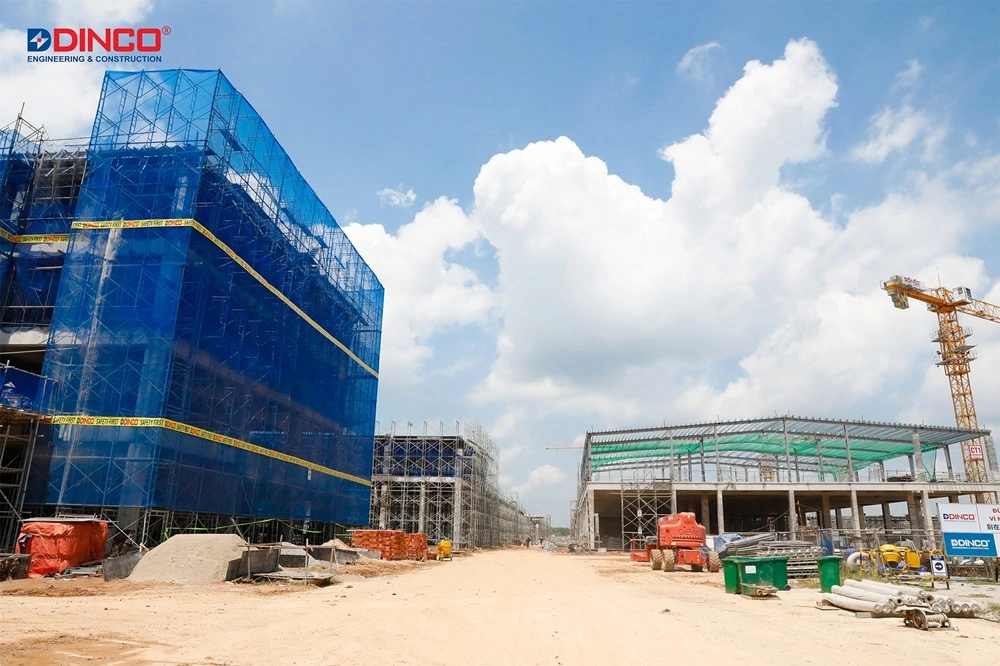
Photos of the Factory Construction
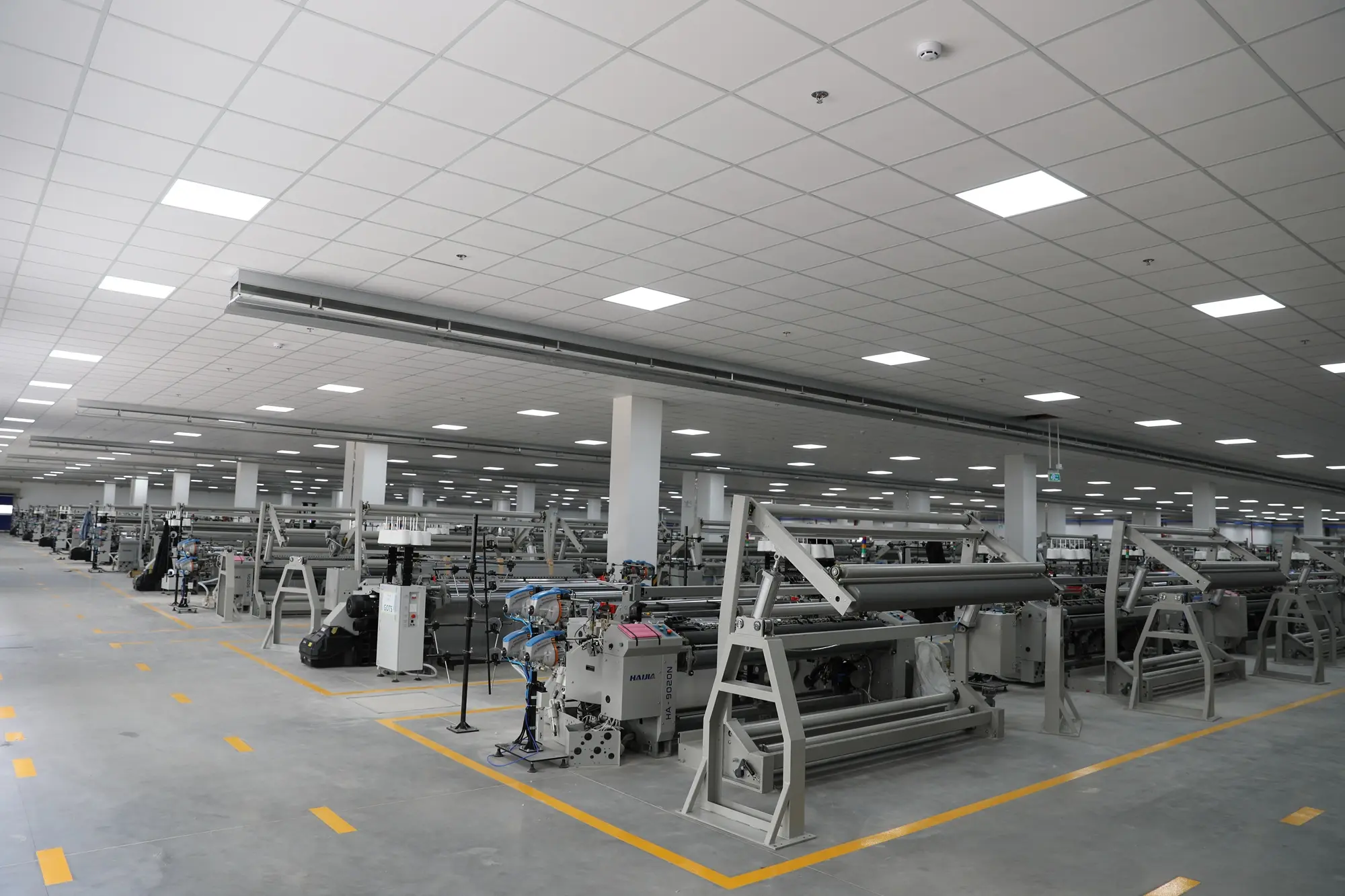
Equipment Installation at the Factory
.webp)
Production Equipment inside the Factory
Supporting the Client's Investment Roadmap
For textile dyeing projects, progress depends on more than design and construction activities alone. These projects are subject to particularly stringent regulatory requirements related to environmental protection, wastewater treatment systems, fire protection and prevention, and technical infrastructure.
For a foreign investor unfamiliar with Vietnam's regulatory framework and approval procedures, such requirements can become one of the project's greatest risks if not addressed from the outset.
Therefore, from the very beginning, Dinco's legal and design consulting teams worked alongside Amazing Ecotech Textile to integrate environmental, fire safety, technical infrastructure, and Vietnamese regulatory requirements into a unified design solution.
This approach minimized the need for revisions during appraisal and approval processes while reducing the risk of costly changes during construction. As a result, the investor could focus on investment planning, production line installation, and operational preparation rather than spending significant time navigating regulatory procedures with multiple stakeholders.
Throughout construction, the project team not only monitored building progress but also continuously updated the investor's equipment import schedules, recruitment plans, and commissioning activities. The ultimate objective was to keep the entire investment roadmap on track.
Every site decision was evaluated based on its impact on these critical milestones.
Because the final goal was never simply to complete another construction package.
It was to ensure that the entire investment plan continued to move forward as intended.
Watch the video to explore the factory's wastewater treatment system:
Value Beyond the Handover Date
Today, Amazing Ecotech Textile has become a modern textile dyeing complex in Quang Ngai, ready to serve the supply chains of global fashion brands such as Uniqlo and Zara.
Yet the project's greatest value does not lie in its scale of over 82,000 m² or its designed capacity of 48 million m² of products annually.
Its greatest value is that the investor was able to continue implementing its investment plan according to the intended roadmap. Production lines were installed on schedule, commissioning proceeded smoothly, and the factory was prepared to enter commercial operation without requiring major renovations or post-handover adjustments.
Mr. Pham Doan Thon, the Project Site Manager, shared:
"For an industrial project, we do not consider the completion date of the building as the final destination. What matters more is that our client's entire production line is installed, commissioned, and put into operation according to plan. Every decision made on site must support that objective."
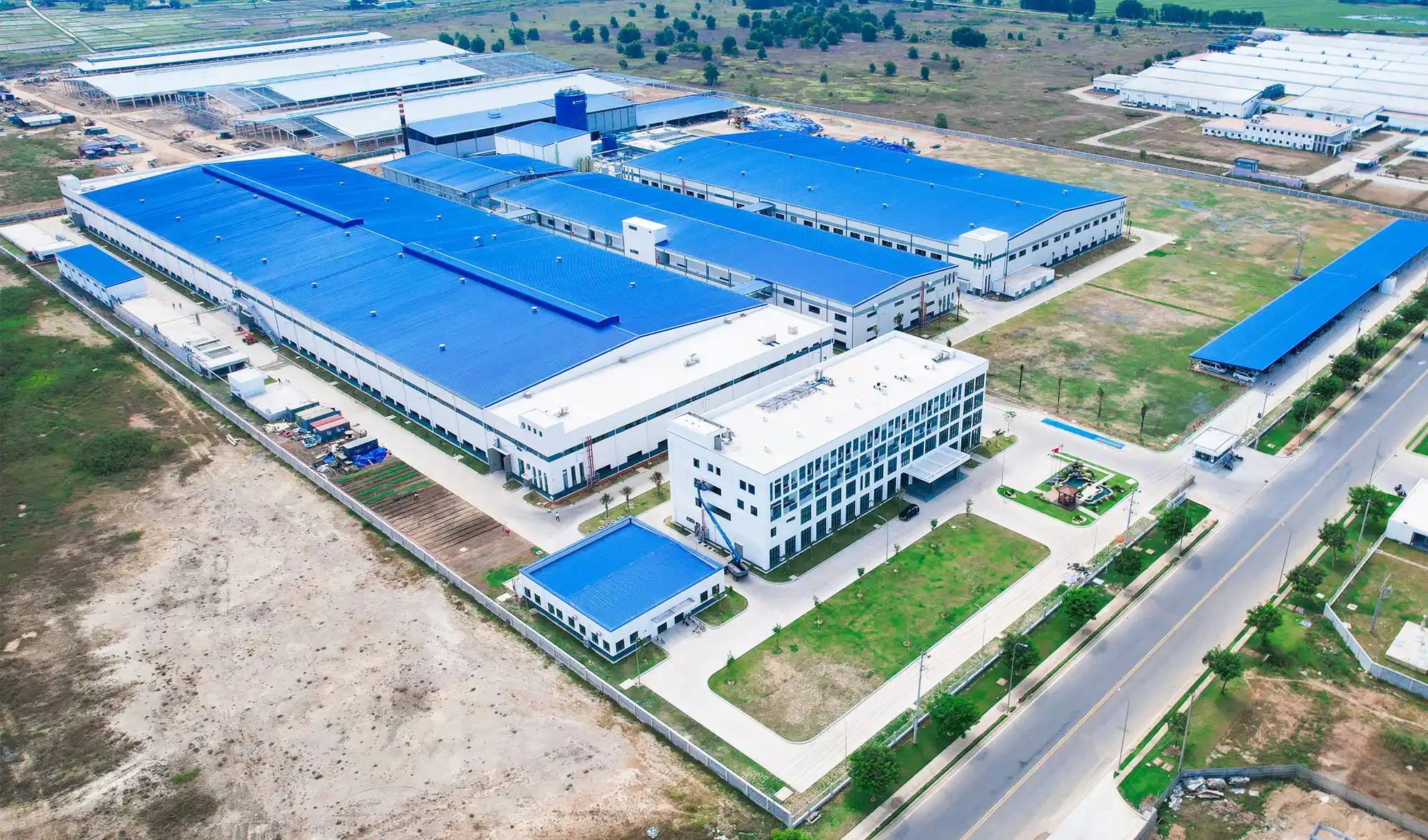
Completed Project
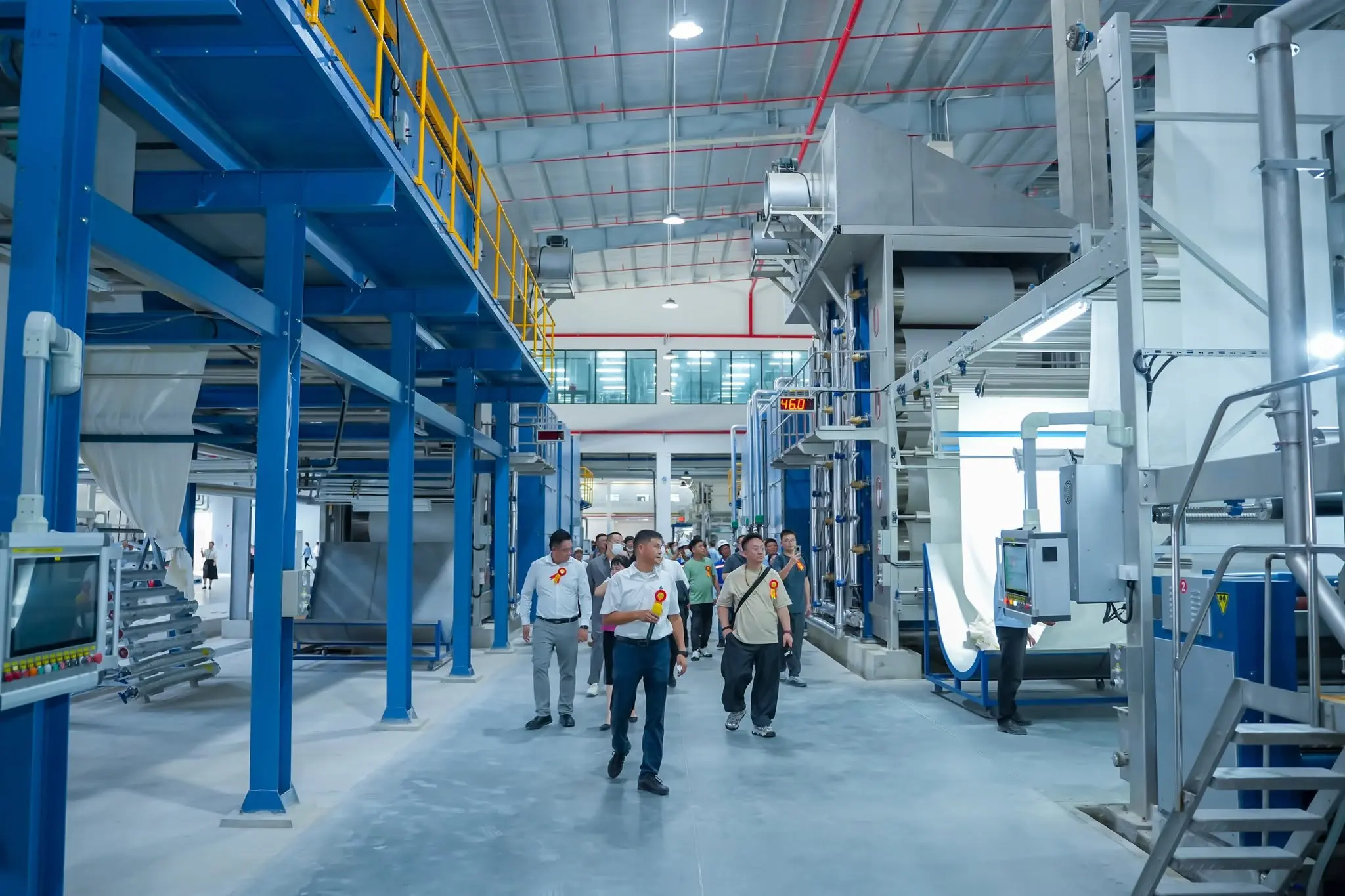
Customers Touring the Factory at the Project Inauguration Ceremony
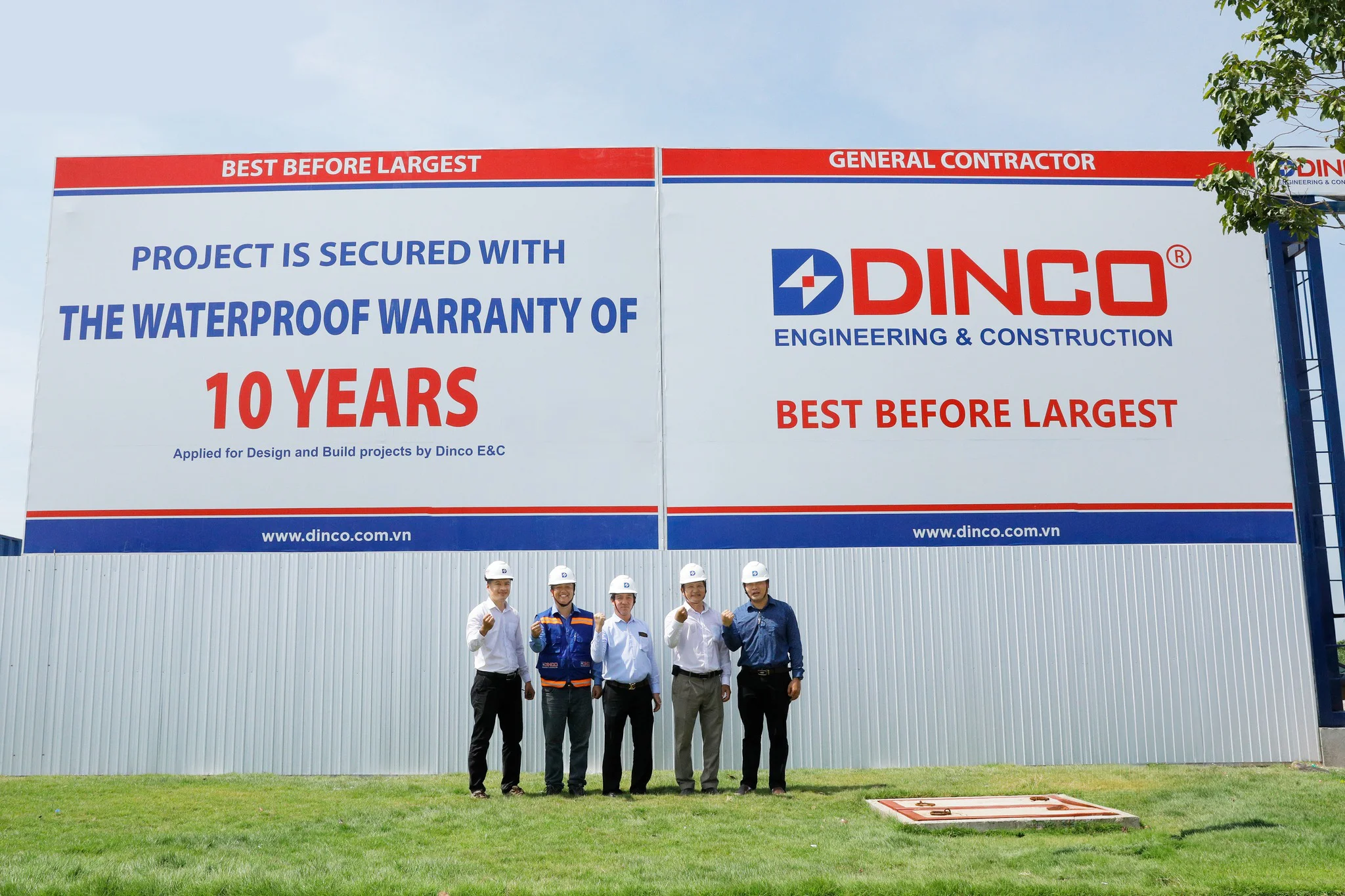
This is also how DINCO E&C defines the role of a Design & Build partner: helping clients achieve their business goals, rather than simply delivering a completed building.
.webp)
Leave a comment